

Lab Test in Dubai: Types, Preparation, and Why Regular Testing Matters
Good health is not only about treating an illness when symptoms appear. It is also about understanding what is happening inside your body and identifying potential health concerns early. A laboratory test can provide valuable information about your blood, organs, hormones, and overall health, helping your doctor make informed decisions about your care.
If you are looking for a lab test in Dubai, understanding the different types of tests, when they may be needed, and how to prepare can help you feel more confident before your appointment.
At Peshawar Medical Center, patients can seek professional guidance about diagnostic testing and the next steps required for their healthcare needs. Whether you need a routine blood test, diabetes screening, a cholesterol check, or testing recommended by your doctor, choosing the right test starts with understanding your health requirements.
Table of Contents
What Is a Laboratory Test?
A laboratory test is a medical investigation performed on a sample of blood, urine, or another body fluid or tissue. The sample is examined to measure specific substances, identify signs of infection, assess organ function, or investigate a possible medical condition.
Doctors use laboratory results alongside your symptoms, medical history, physical examination, and other investigations. A test result alone does not always confirm a diagnosis, which is why professional interpretation is important.
For example, a blood test may help identify anaemia, monitor blood sugar levels, or provide information about kidney and liver function. Your doctor can explain which investigations are appropriate for your age, symptoms, medical history, and individual risk factors.
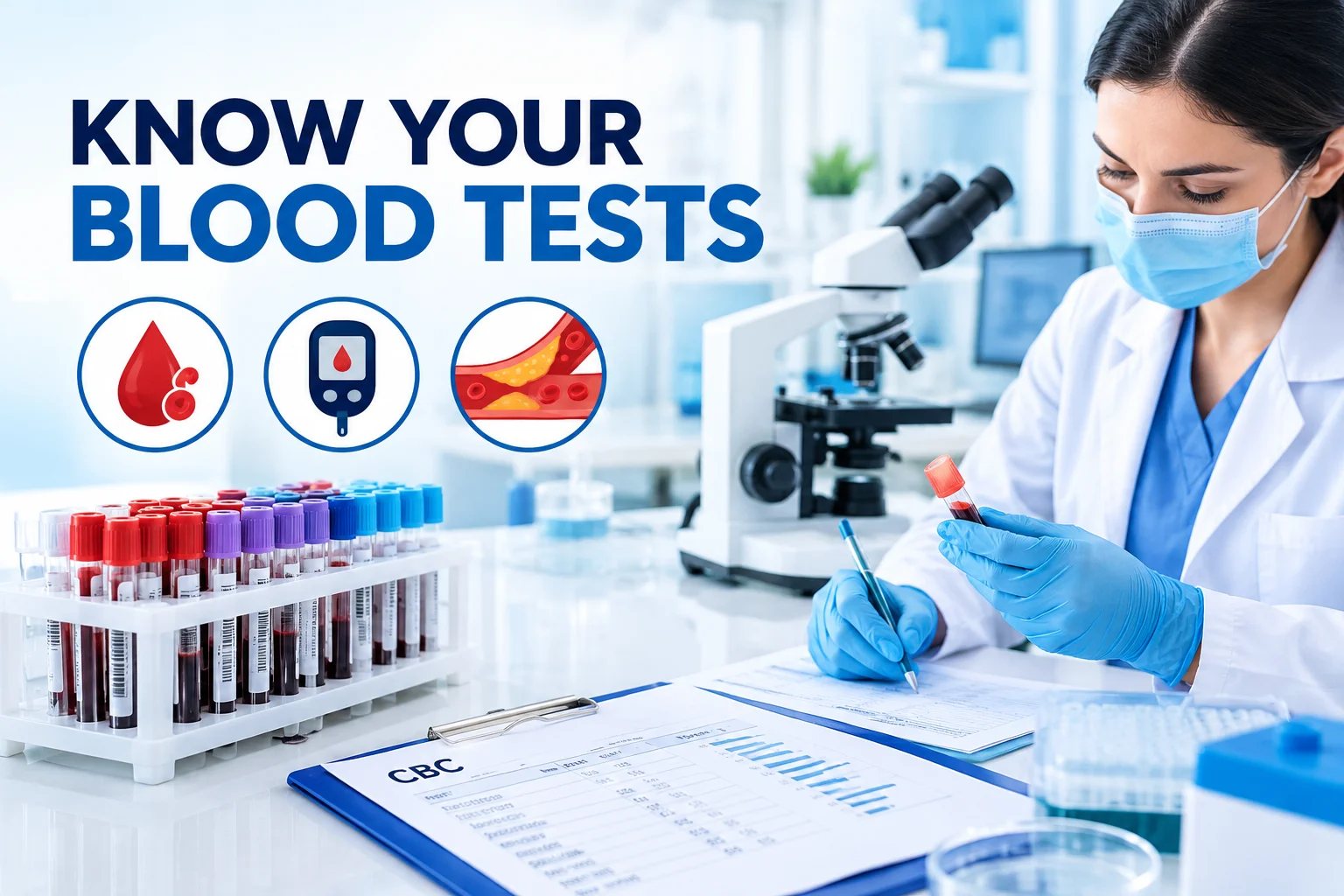
Common Types of Lab Tests in Dubai
Different laboratory tests serve different purposes. The right option depends on what your doctor needs to investigate or monitor.
1. Complete Blood Count (CBC)
A complete blood count, commonly called a CBC, measures several components of your blood, including red blood cells, white blood cells, haemoglobin, and platelets.
Doctors may recommend a CBC when investigating symptoms such as persistent tiredness, weakness, unexplained bruising, or suspected infection. It can also be used during routine assessments and to monitor certain medical conditions.
Abnormal results do not automatically mean that a serious illness is present. Your doctor will consider the findings alongside your symptoms and other relevant information.
2. Blood Sugar and HbA1c Tests
Blood glucose testing measures the amount of sugar in your blood at a particular time. An HbA1c test provides an estimate of your average blood glucose level over approximately the previous two to three months.
These tests are commonly used to screen for, diagnose, or monitor diabetes, depending on the clinical situation.
People with risk factors such as a family history of diabetes, excess body weight, or certain other medical conditions may benefit from discussing appropriate screening with their healthcare provider. Frequent thirst, increased urination, and unexplained weight changes are also reasons to seek medical advice.
Your doctor will explain whether a fasting glucose test, HbA1c test, or another investigation is suitable for you.
3. Cholesterol and Lipid Profile
A lipid profile measures fats in the blood, usually including total cholesterol, LDL cholesterol, HDL cholesterol, and triglycerides.
These measurements help doctors assess cardiovascular risk alongside other factors such as blood pressure, smoking, age, and family history.
High cholesterol often causes no noticeable symptoms. This is one reason why appropriate screening can be valuable, particularly for people with diabetes, high blood pressure, or a family history of cardiovascular disease.
Ask your doctor how often you should have your cholesterol checked and whether fasting is necessary for your particular test.
4. Liver Function Tests
Liver function testing commonly includes measurements such as ALT, AST, alkaline phosphatase, and bilirubin. Depending on the panel, other markers may also be included.
These tests can help investigate possible liver inflammation, monitor certain medications, or assess concerns associated with liver disease.
Symptoms such as yellowing of the skin or eyes, persistent abdominal discomfort, dark urine, or unexplained fatigue may require medical evaluation. However, liver conditions can sometimes develop without obvious symptoms.
Your doctor will determine whether liver testing is appropriate and whether further investigations are needed.
5. Kidney Function Tests
Kidney-related blood tests may include creatinine, blood urea, and estimated glomerular filtration rate (eGFR). Urine tests may also be recommended to look for protein or other abnormalities.
These investigations help assess how well the kidneys are working and may be particularly important for people with diabetes, high blood pressure, or existing kidney problems.
Early kidney disease may not cause clear symptoms. Following your doctor’s screening recommendations can help identify changes that might otherwise go unnoticed.
6. Thyroid Function Tests
The thyroid gland helps regulate metabolism, energy use, and several important body functions. Thyroid testing commonly includes thyroid-stimulating hormone (TSH), with additional tests such as free T4 when indicated.
A doctor may recommend thyroid investigations for symptoms such as unexplained weight changes, unusual tiredness, sensitivity to heat or cold, or changes in heart rate.
These symptoms can have several causes, so testing and medical assessment are important before concluding that a thyroid disorder is responsible.
7. Vitamin and Other Specialised Tests
Depending on your symptoms and medical history, your doctor may recommend vitamin B12, vitamin D, iron studies, hormone tests, or investigations for particular infections.
Not everyone needs every available test. Unnecessary testing can create confusion and lead to follow-up investigations that may not benefit the patient.
A healthcare professional can help you choose tests based on clinical need rather than relying on a long list of investigations without a clear purpose.
When Should You Consider a Lab Test?
A laboratory investigation may be recommended in several situations, including:
- Routine health assessment: To review selected health markers based on your age and risk factors.
- Unexplained symptoms: To investigate persistent fatigue, weakness, dizziness, or other concerns.
- Chronic disease monitoring: To help manage conditions such as diabetes, thyroid disorders, or kidney disease.
- Medication monitoring: To check for certain effects or complications associated with prescribed treatment.
- Preventive screening: To assess specific health risks before symptoms develop.
- Follow-up care: To evaluate changes after treatment or compare results over time.
You do not necessarily need a comprehensive package every year. The most useful testing schedule is one tailored to your health and guided by a qualified healthcare professional.
How to Prepare for a Lab Test
Preparing correctly can help reduce avoidable errors and delays. The instructions depend on the specific investigation.
Follow fasting instructions
Some tests require fasting, while many others do not. If fasting is required, your healthcare provider or laboratory should explain how long to fast and whether plain water is permitted.
Do not fast unnecessarily or assume every blood test requires it.
Tell your doctor about medications
Certain medicines and supplements can affect laboratory measurements. Inform your healthcare professional about what you take, but do not stop prescribed medication unless your doctor specifically advises you to do so.
Stay hydrated when appropriate
Drinking water is generally permitted for many routine blood tests and may make blood collection easier. Follow any specific instructions you receive for your investigation.
Share relevant health information
Tell the medical team if you are pregnant, have a known medical condition, have recently been ill, or have experienced a reaction during previous blood collection.
Confirm your appointment details
Before visiting a medical center in Dubai, confirm the test requirements, availability, expected turnaround time, and any applicable fees. If you have a doctor’s referral, bring it along with any relevant previous results.
What Happens After Your Lab Test?
After your sample is collected, it is processed and analysed using methods appropriate for the requested investigation. The time needed to complete a test varies according to the type of analysis, laboratory workload, and whether specialised testing is required.
Some routine tests may be reported relatively quickly, while specialised investigations can take longer.
Once your results are available, your doctor can explain what the findings mean in the context of your health. A result outside the laboratory’s reference range does not always indicate disease, and a result within that range does not necessarily rule out every condition.
If your results are unexpected, your doctor may recommend repeating the test, reviewing your medication, conducting a physical examination, or arranging further investigations.
Keep copies of important results when appropriate. Comparing results over time can sometimes be more informative than looking at a single measurement.

Choosing a Medical Center for a Lab Test in Dubai
When selecting a medical center for diagnostic testing, consider more than convenience alone.
Look for qualified healthcare professionals, appropriate laboratory arrangements, clear instructions before sample collection, transparent information about fees, and a reliable process for communicating results.
It is also helpful to understand whether a doctor is available to discuss abnormal findings or recommend the next steps. A test becomes more useful when its results are connected to appropriate medical care.
Peshawar Medical Center serves patients in Dubai who need guidance regarding healthcare and diagnostic investigations. Before visiting, contact the center to confirm your required test, availability, preparation instructions, and expected reporting time.
Peshawar Medical Center
Location: Z-05, Warsan First, England Cluster, Dubai, United Arab Emirates.
Website: https://peshawarmedicalcenter.ae/
For information about a particular blood test or laboratory investigation, contact the medical center directly.
Frequently Asked Questions
1. Which lab tests are commonly recommended for routine health checks?
Depending on your age, symptoms, and risk factors, your doctor may consider a CBC, blood glucose or HbA1c, lipid profile, kidney function tests, or other investigations. Not every person needs all of these tests.
2. Do I need to fast before a blood test?
Not always. Some tests require fasting, while others can be performed without it. Follow the instructions provided for your specific test.
3. How long does it take to receive lab test results in Dubai?
Turnaround times vary by test and laboratory. Some routine investigations may be completed within a day, while specialised tests may take longer. Confirm the expected reporting time before sample collection.
4. Can a laboratory test identify a medical condition without symptoms?
Some tests can help detect changes before symptoms develop. However, the value of screening depends on the condition, your individual risk factors, and whether testing is medically recommended.
5. Where can I ask about a lab test in Dubai?
You can contact Peshawar Medical Center to ask about available investigations, preparation requirements, appointment arrangements, and reporting times. A healthcare professional can help determine which test is appropriate for your needs.
Conclusion
Laboratory testing plays an important role in preventive healthcare, investigating symptoms, and monitoring ongoing medical conditions. From a CBC and diabetes screening to cholesterol, liver, kidney, and thyroid investigations, each test provides different information about your health.
If you are searching for a lab test in Dubai, start by discussing your symptoms, health history, and screening needs with a qualified healthcare professional. Understanding how to prepare and what your results mean can help you make informed decisions about your care.
Contact Peshawar Medical Center for information about diagnostic testing and the next steps for your healthcare needs.