Heart health assessment has evolved significantly with advancements in medical technology. Today, physicians have multiple diagnostic tools available to evaluate cardiac function, ranging from simple screening tools to highly detailed imaging techniques. One of the most important comparisons in modern cardiology is ECG vs advanced cardiac imaging, as both play essential but different roles in heart diagnosis.
At Peshawar Medical Center, a structured diagnostic approach ensures that patients receive the most appropriate test based on symptoms, risk factors, and clinical findings.
Understanding ECG: A First-Line Cardiac Test
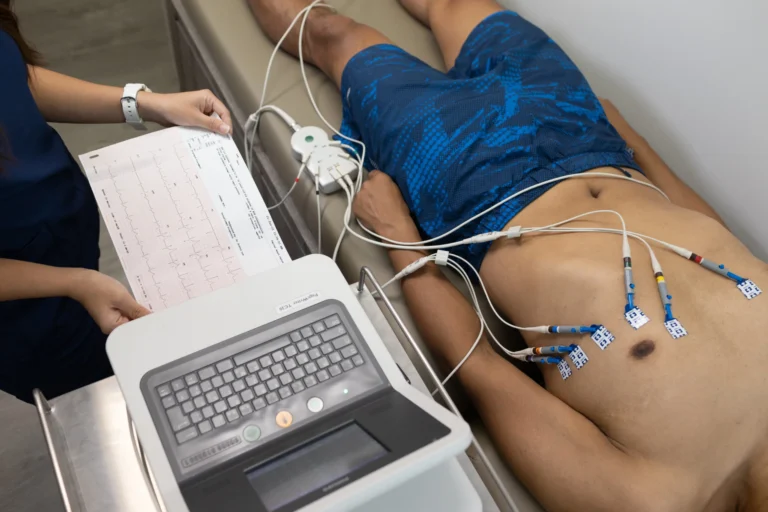
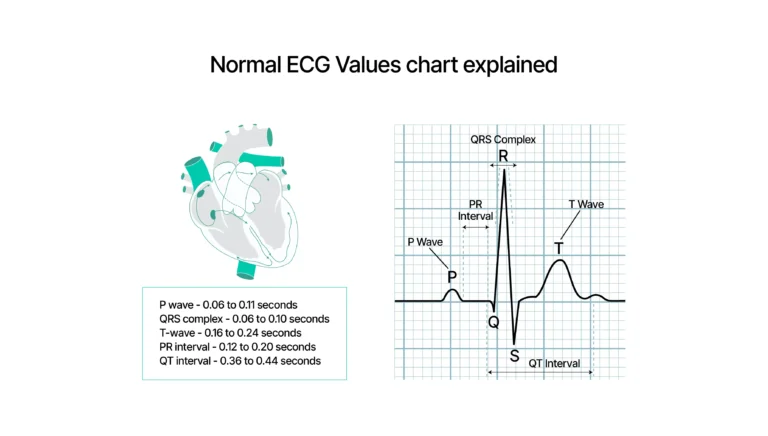
An electrocardiogram (ECG) is a simple, non-invasive test that records the electrical activity of the heart. In the discussion of ECG vs advanced cardiac imaging, ECG is considered the first-line screening tool.

What ECG Can Detect
ECG is useful for identifying:
- Irregular heart rhythms (arrhythmias)
- Evidence of previous or ongoing heart attacks
- Electrical conduction problems
- Signs of heart strain
Because it is quick, affordable, and widely available, ECG is often the first step in evaluating heart-related symptoms.
Understanding Advanced Cardiac Imaging
Advanced cardiac imaging includes specialized diagnostic techniques that provide detailed structural and functional information about the heart. When comparing ECG vs advanced cardiac imaging, imaging offers much deeper insight into heart anatomy and blood flow.
Common Types of Cardiac Imaging
- Echocardiography (ultrasound of the heart)
- CT coronary angiography
- Cardiac MRI
- Nuclear stress testing
What Advanced Imaging Can Reveal
These techniques assess:
- Heart chamber size and pumping efficiency
- Blood flow to the heart muscle
- Valve function and structural abnormalities
- Blockages in coronary arteries
Unlike ECG, advanced imaging provides visual and detailed anatomical information.
ECG vs advanced cardiac imaging: Key Differences
Understanding ECG vs advanced cardiac imaging helps in knowing how doctors choose the right test.
1. Purpose of Testing
- ECG: Measures electrical activity of the heart
- Imaging: Evaluates structure, function, and blood flow
2. Speed and Accessibility
- ECG: Quick, simple, and widely available
- Imaging: More complex and time-consuming
3. Level of Detail
- ECG: Basic screening tool
- Imaging: Comprehensive diagnostic evaluation
4. Cost and Usage
- ECG: Affordable and used as a first step
- Imaging: Higher cost, used for detailed assessment
When Is an ECG Enough?
In the context of ECG vs advanced cardiac imaging, ECG alone may be sufficient for:
- Routine health check-ups
- Initial evaluation of chest pain or palpitations
- Monitoring known heart conditions
- Pre-operative screening
When Is Advanced Cardiac Imaging Required?
Advanced imaging is recommended when:
- ECG results are unclear
- Symptoms persist despite normal ECG
- Structural heart disease is suspected
- Detailed assessment of blood flow is needed
- High-risk cardiovascular conditions are present
The Importance of a Stepwise Approach
Modern cardiology uses a stepwise method:
- ECG as the initial screening test
- Clinical evaluation of symptoms and risk factors
- Advanced cardiac imaging if needed
This structured approach in ECG vs advanced cardiac imaging ensures accurate diagnosis while avoiding unnecessary tests.

Conclusion
The comparison of ECG vs advanced cardiac imaging highlights that both tests are essential in heart disease diagnosis but serve different purposes. ECG is fast and ideal for initial screening, while advanced imaging provides detailed insights for complex cases.
At Peshawar Medical Center, patients benefit from a patient-centered diagnostic approach that ensures the right test is selected at the right time for accurate diagnosis and effective treatment planning.
FAQs Bout ECG vs Advanced Cardiac Imaging
1. What is the difference between ECG vs advanced cardiac imaging?
ECG measures the electrical activity of the heart, while advanced cardiac imaging shows detailed structure, function, and blood flow of the heart.
2. Is ECG enough to diagnose all heart problems?
No, ECG is useful for initial screening, but advanced cardiac imaging may be needed for detailed diagnosis of structural or blood flow issues.
3. When do doctors recommend advanced cardiac imaging?
Doctors recommend it when ECG results are unclear, symptoms persist, or there is suspicion of heart disease that needs detailed evaluation.
4. Is ECG vs advanced cardiac imaging safe for patients?
Yes, both are generally safe and non-invasive. Some imaging tests may involve minimal radiation depending on the type.
5. Which test is better for heart disease detection?
Neither is better alone. ECG is best for quick screening, while advanced cardiac imaging provides detailed information for accurate diagnosis.